Start with what the photograph can show
An opal listing can feel like a tiny theatre: blue appears, green takes the stage, then an orange flash seems to move through the stone. That visual invitation is real. The problem begins when one persuasive photograph is asked to answer every question about the object. A photograph records a particular angle, light and exposure; it is not a complete examination.
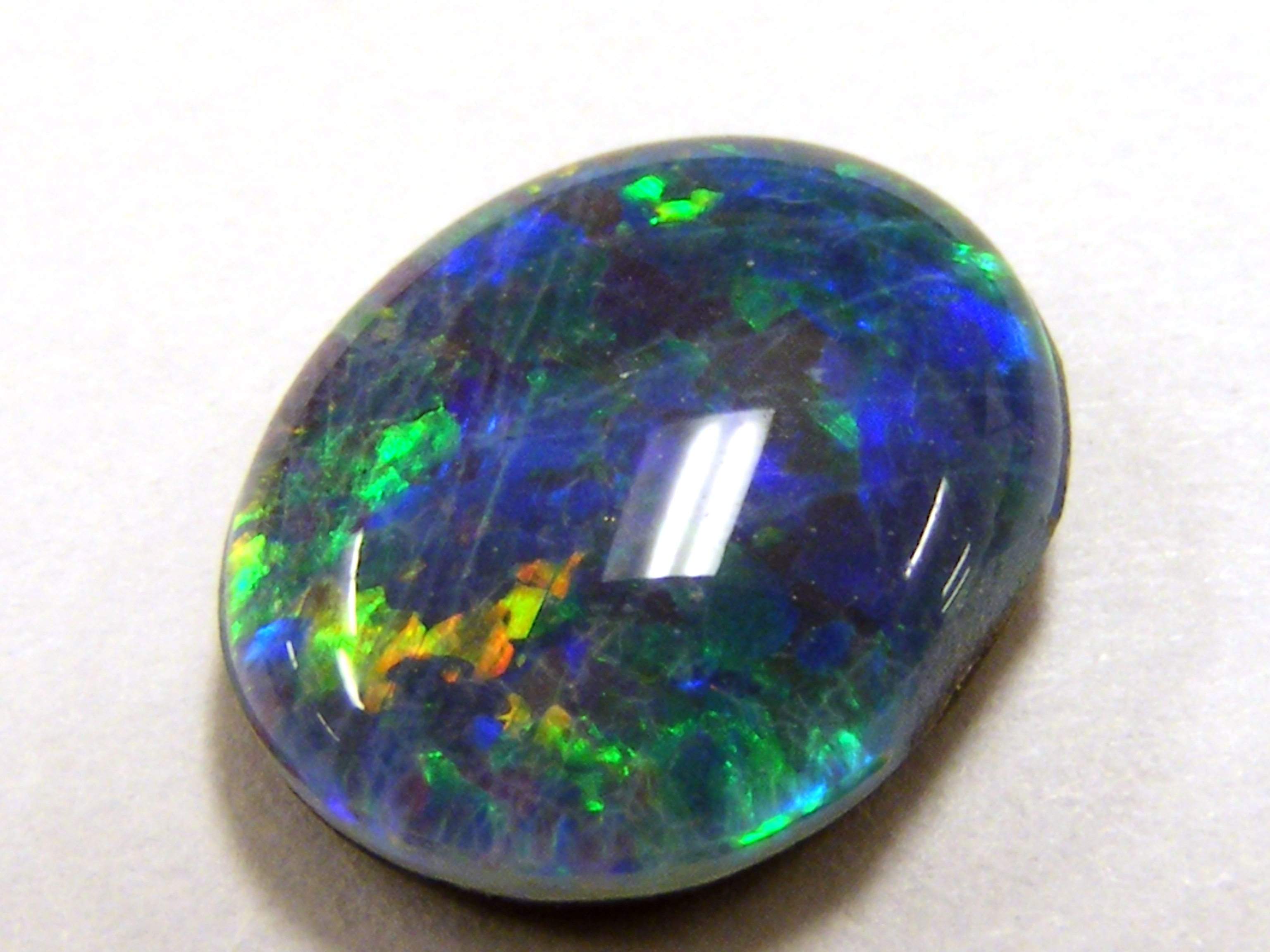
Our question is simple: what should you ask before buying an opal online? Begin by describing the visible image without making a verdict. In the licensed photograph here, coloured patches sit within an oval face against a pale surface. The file’s creator calls this specimen an opal doublet. We use that documented description, rather than claiming that its construction can be established from the front view alone.
Separate bodycolour from the moving colour
GIA distinguishes the background, or bodycolour, from play-of-colour, the coloured flashes whose appearance can change with viewing angle and lighting. This distinction gives you two useful questions: what background does the seller describe, and how does the colour appear as the stone moves? A single bright frame cannot settle either question across every viewing condition.
For a comparison, request a face-on still plus a short, unfiltered movement video in stated lighting, with the same stone kept in view. Ask for a second view in ordinary diffuse light, rather than only a spotlight performance. This is our editorial method for making listings easier to compare, not a laboratory test or a promise that video cannot be manipulated. If the setting hides the back or edge, record that limit instead of filling it with an assumption.
Ask about layers before using the word solid
GIA describes a doublet as a thin opal layer attached to a backing. A triplet adds a transparent cap above an opal layer and backing. These are construction descriptions. They should be stated clearly so a reader understands what is being offered. A dark-looking face, by itself, does not tell you which construction you are seeing.
Ask the seller to state whether the piece is a single opal, an assembled doublet or triplet, and whether natural host rock remains part of it. Request an edge and reverse photograph where the mounting permits them. “Natural opal” does not, by itself, answer the separate assembly question. Do not attempt to prise a stone from its mounting to look for a seam; if the answer matters and remains unclear, seek a qualified examination or choose a listing with adequate disclosure.
Give treatment and origin their own lines
Keep the seller’s treatment statement separate from the material and construction statement. Ask what is known, what was tested, and which report—if any—belongs to the exact item. GIA’s care guidance lists several opal treatments, including impregnation and surface modifications. A beautiful colour image does not supply that missing history.
Origin needs its own evidence as well. The photographer’s description locates the pictured doublet in Andamooka; that is attribution for this image, not an origin report for an unrelated purchase. When a listing names a country, mine or locality, ask what supports the statement. An invoice, a seller’s account and a laboratory conclusion are different kinds of evidence. Name each accurately in your own notes.
An original comparison card for two listings
Here is a hypothetical example, not a review of actual stones. Listing A offers a brilliant front image and says “opal pendant,” but leaves assembly and treatment unanswered. Listing B supplies calmer images, identifies a doublet, shows its edge, and provides a written care statement. You cannot declare B finer or more valuable from this information. You can say that B currently answers more of the construction questions.
Make a card with six fields: item identity; stated construction; treatment statement; lighting and views supplied; documents matched to the item; unresolved question. Then add your personal preference separately: “I like the broad green areas.” Before paying, send one focused request, such as “Please confirm whether this is assembled and provide an edge view of this exact pendant.” The point is to make an answer possible, rather than ask the vague question “Is it good?”
End with a wearing plan, not a screen verdict
Think about where the jewel will spend its days. A pendant and a ring meet different patterns of contact. Discuss the actual setting, intended wear and care with the seller or jeweller. GIA warns that high heat and abrupt temperature changes can damage opal. Do not infer a safe cleaning method for an assembled or treated piece from advice intended for another construction.
Request written care instructions specific to the complete jewel, including its setting and any assembly. Keep them with the description and current return terms. A consequential purchase may justify independent professional advice; no photograph here establishes authenticity, origin or value. The pleasure is still in the colour, but the decision becomes clearer when the light, the layers and the remaining questions each have their own place.
Continue in the archive
Sources and image rights
Primary sources and photograph rights checked on 12 November 2026.